
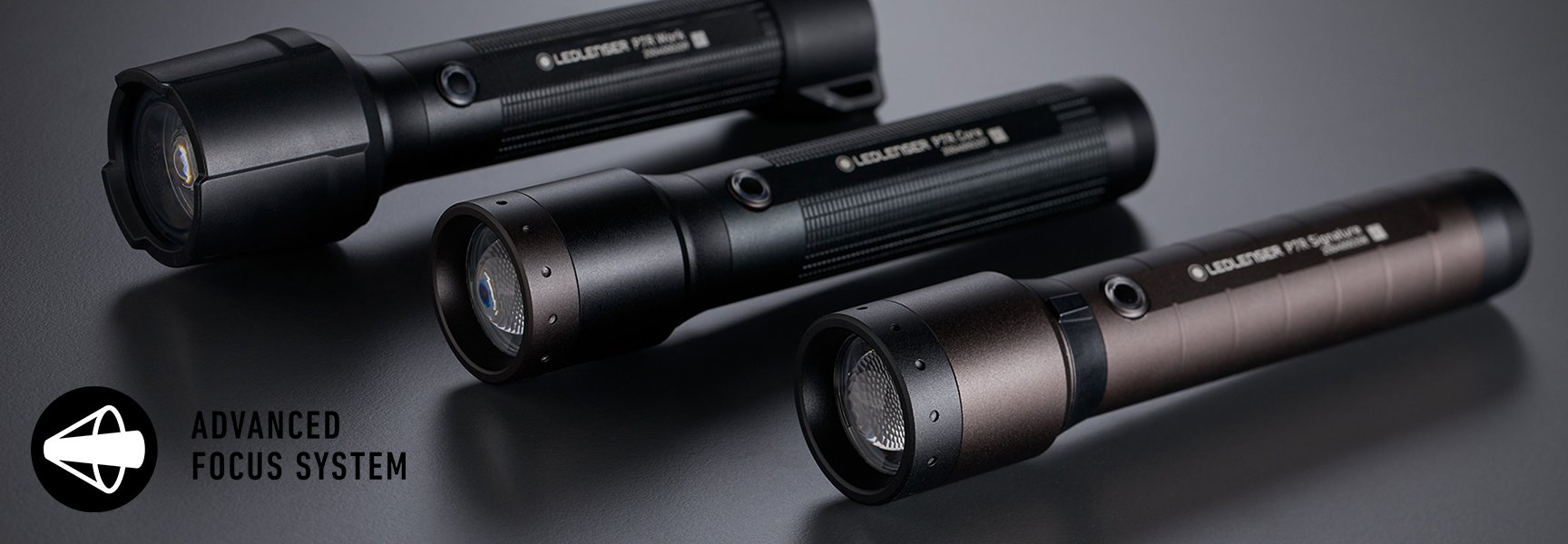
The Advanced Focus System: Perfect illumination in every situation
Ledlenser LED flashlights and headlamps have innovative features and superior functionality. We don't focus solely on the advantages of a few components, such as the high-intensity and long-life LEDs. The German engineering artistry we live by is the decisive factor that makes our flashlights and LED headlamps so powerful and reliable. The result is breakthrough technology, like our Advanced Focus System, that gives you the best possible advantage in any situation.
What is the Advanced Focus System?
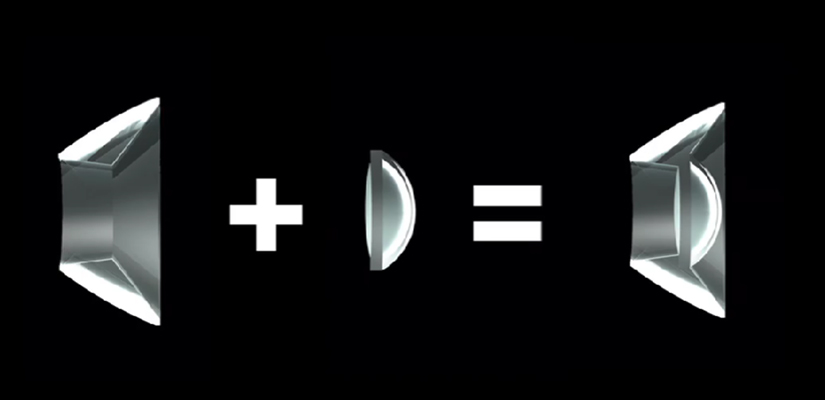
The Advanced Focus System – AFS for short – is an innovative technology that combines the advantages of lenses and reflectors. By intelligently combining these elements, the AFS lets you flexibly adjust the light beam to produce a wide illumination of near areas and a sharply focused high beam. With a single touch, you can adjust the beam of your lamp to your needs and create the perfect lighting for any situation.
The advantages of flashlights and headlamps with the Advanced Focus System
Lamps with the Advanced Focus System offer you a number of advantages:
- Versatility: the AFS gives you a variety of lighting options in a single lamp. From a wide beam that illuminates the entire room to a focused beam for greater reach, the AFS puts allows you to fully control your light.
- Precision: the precise focus of the AFS lets you clearly see details in the distance and target objects. Whether you're on a nighttime hike or performing manual labor in tight areas, with the AFS, you'll always have the right light at your fingertips.
- Efficiency: the AFS optimizes the light output and extends the battery life of your flashlight or headlamp. By targeting the light beam, no resources are wasted, so you can benefit from high performance for longer.
- Ease of use: the AFS is easy to use. Intuitive mechanisms allow you to effortlessly and quickly adjust the focus of the light beam for the desired illumination. Simple handling for an optimal lighting solution.
Conventional flashlights have either a lens or a reflector. While lamps with reflectors produce a good high beam, they don't provide as good illumination of closer surroundings. When focused, the brightness of their light cone is not uniform. There are dark circles and light rings. Also, a reflector never captures all the light from the light source, so these flashlights are not as efficient.
Flashlights with lenses often don't have a well-focused high beam and therefore don't shine as far as lamps with reflectors. But they can be very efficient. The Advanced Focus System combines the advantages of both technologies.
How does the Advanced Focus System work?
-
Close-range illumination: when the optics are positioned close to the LED, the light beam is diffused and distributes the light more widely. This is useful for illuminating a larger closeup areas, such as when camping, reading, or illuminating a tent or a room.
- High beam focus: when the optics are further away from the LED, the light beam is bundled and focused. This creates a narrow, concentrated beam of light with a greater range. This is ideal for illuminating objects in the distance, such as when hiking, for search and rescue, or other activities that require strong and focused lighting.
By sliding the lens in the flashlight, you can adjust the light beam as needed and switch continuously between close-range illumination and long-range focus. This allows you to have flexible and versatile lighting depending on what you need in each situation.
The exact operating principle of the AFS may vary depending on the model and design of the flashlight or headlamp. We have developed several versions and enhancements of the Advanced Focus System over the years to further optimize performance and usability.
Are you ready to experience the benefits of our Advanced Focus System?
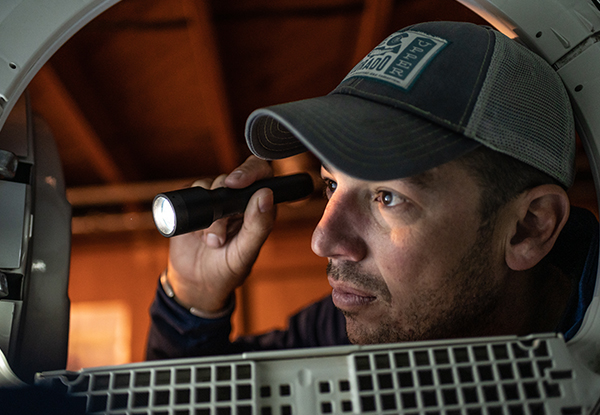
Flashlights and headlamps with the Advanced Focus System (AFS) are especially useful if you need versatile lighting and have different requirements in different situations. For example:
- For outdoor activities such as hiking, camping and geocaching, you can use the wide light cone to illuminate your campsite and, if necessary, focus the light beam to illuminate paths or objects in the distance.
- Craftsman, mechanics and do-it-yourselfers can use the wide light cone for general illumination and benefit from the focused light beam for precise work in tight areas.
- Security personnel or rescue workers such as police, firefighters and other emergency personnel often need strong and focused lighting for search and rescue operations. Flashlights with AFS let you focus the beam of light far away to quickly locate people and objects in the distance.
- Flashlights with AFS are also useful for everyday use. They can be used, for example, for reading in dark rooms, searching for items in closets, or during power outages.
Flexible light for every situation - The Advanced Focus System (AFS) at a glance
The Advanced Focus System (AFS) is an innovative technology used in many of our flashlights and headlamps. It combines the advantages of lenses and reflectors to provide both wide illumination of near areas and a sharply focused high beam. This allows you to flexibly adapt the lighting to different situations.
You can use the Advanced Focus System in a variety of applications. Whether you're on an outdoor adventure, doing handyman work, or in an emergency situation, the AFS gives you the flexibility you need to best illuminate your surroundings and to meet your needs. If you're looking for a versatile flashlight or headlamp, AFS lamps are the way to go.


